Peak to Peak: Breaking Down the Arc That Makes a LaPac Boys Show Feel Like Nothing Else

Photo: Vyacheslav Argenberg, CC BY 4.0, via Wikimedia Commons
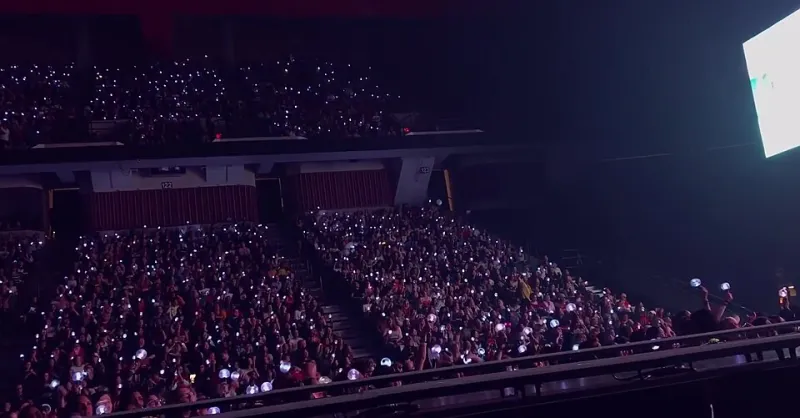
Anyone who's been to a LaPac Boys show will tell you the same thing: it doesn't feel like a regular concert. There's something about the pacing, the sequencing, the way the energy in the room builds and releases and builds again — it feels intentional in a way that a lot of live performances simply don't. That's because it is.
The setlist is one of the most underappreciated craft elements in live music. Most fans experience it as a spontaneous flow of songs, but behind that feeling is a lot of deliberate thinking. For LaPac Boys, the setlist is less a playlist and more a script — one that accounts for crowd psychology, sonic dynamics, and the very specific kind of storytelling that only works in a room full of people.
We dug into some of their most celebrated performances, talked to fans who've seen multiple shows, and explored what the group has shared publicly about their live philosophy. Here's what we found.
The Opening Salvo: Setting the Table
How you open a show tells the audience everything about what kind of night it's going to be. LaPac Boys have a reputation for coming out of the gate hard — not necessarily with their biggest hits, but with something that immediately signals the room is about to get loud.
The strategic logic here is sound. Opening with a fan-favorite deep cut rather than a mainstream hit does two things: it rewards the people who know the catalog, and it creates an instant sense of intimacy. The superfans in the crowd go absolutely wild, and that energy is contagious. By the time the casual listeners catch up to what's happening, the room is already alive.
It's a move borrowed from the playbook of some of the best live acts in the game — but LaPac Boys execute it with a specificity that feels entirely their own.
The Architecture of a Middle Section
If the opener is the hook, the middle of a LaPac Boys set is the verse — where the real work happens. This is where setlist construction gets genuinely sophisticated.
Rather than sequencing songs purely by tempo or release date, LaPac Boys seem to think in terms of emotional texture. A high-energy run of three or four tracks gets followed by a deliberate slowdown — something more atmospheric, more introspective. It gives the crowd a moment to breathe, to feel something different, before the energy cranks back up.
Fans who've tracked multiple setlists across different tours have noticed that this push-pull rhythm is a consistent feature, not an accident. "They always give you a moment where you're just standing there kind of emotional and you don't even know why," says longtime fan Keenan L. from Philadelphia. "And then the next song hits and you're losing your mind again. It's like they know exactly what they're doing to you."
That's not a coincidence. That's craft.
Deep Cuts vs. Crowd Pleasers: Finding the Balance
One of the trickiest tightropes any established act has to walk is balancing the deep catalog with the accessible hits. Lean too far into deep cuts and you risk losing the casual fans who came to hear the songs they know. Play nothing but the hits and the diehards feel like they're at a greatest-hits revue.
LaPac Boys thread this needle better than most. Their approach seems to be rooted in sequencing rather than proportion — it's not just about how many deep cuts you play, it's about when you play them.
Deep cuts tend to show up in the first third of the set, when the superfans are at peak alertness and the crowd is still warming up. By the time you get to the back half of the show, the room is primed for the songs everyone knows, and those moments hit even harder because of the journey that preceded them.
The Moment Everything Shifts
Every great live performance has a pivot point — a single song or moment where the energy in the room changes permanently and the show locks into a different gear. For LaPac Boys, fans describe this moment differently depending on which show they attended, but the feeling is always the same: something shifts, and you realize you're watching something special.
Sometimes it's a surprise track. Sometimes it's an extended instrumental breakdown. Sometimes it's something as simple as a pause before a chorus where the whole crowd fills in the silence. Whatever the mechanism, it's clearly engineered — and it works every single time.
"There was a moment at a show in LA where they just stopped and let the crowd carry the song for like 30 seconds," recalls Deja M. from Atlanta, who traveled specifically for that performance. "Nobody needed to be told what to do. Everyone just knew. That doesn't happen unless the crowd is completely with you."
Getting a crowd to that level of engagement is the whole game. And LaPac Boys get there consistently.
Closing Strong: The Art of the Send-Off
How you end a show is as important as how you start it. The closing stretch of a LaPac Boys set tends to follow a clear philosophy: build to a peak, let the crowd feel the peak, and then send them home with something that lingers.
The final song is rarely the loudest or fastest. More often it's something that carries emotional weight — a track that feels like a statement rather than a sprint. Fans walk out of the venue feeling something, and that feeling is the whole point. A show that ends on pure adrenaline fades fast. A show that ends on meaning sticks with you.
That's the LaPac Boys difference. It's not just about the songs. It's about the shape of the whole thing — the arc, the intention, the awareness that a live show is a unique form of communication that has its own grammar and its own rules.
They've figured out those rules. And every night they step on stage, they prove it.