Copy, Remix, Repeat: How the LaPac Boys Lit the Fuse for a DIY Music Revolution
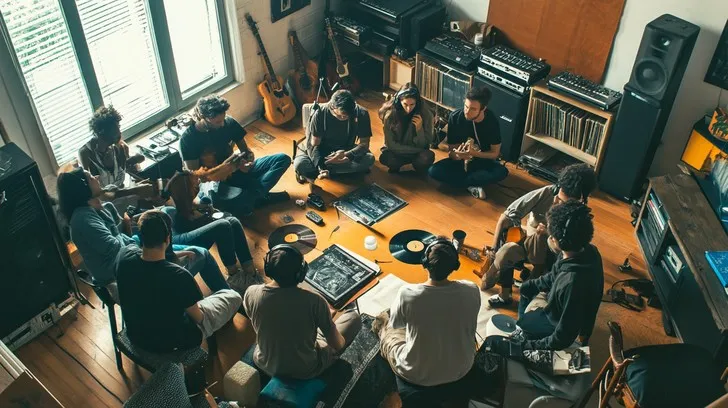
Photo: independent musicians DIY recording studio creative collaboration, via images.stockcake.com
There's a moment a lot of young artists describe the same way. They're sitting in some cramped apartment, scrolling through footage of the LaPac Boys moving merch out of a van, selling out a 1,200-cap venue they booked themselves, and running a fan community so tight it feels like a family reunion. And then comes the thought: Wait — they did all of that without a label?
That realization has quietly become one of the most contagious ideas in independent music right now. The LaPac Boys didn't just build a career — they accidentally wrote a curriculum.
The Blueprint Nobody Asked For (But Everyone Needed)
Let's be real: the LaPac Boys never positioned themselves as mentors or movement leaders. They were too busy grinding. But when you spend years proving that direct-to-fan sales can outpace label advances, that guerrilla marketing can crack regional markets wide open, and that ownership over your catalog is worth more than a shiny advance check — people pay attention.
Jordan Reeves, a 24-year-old rapper out of Columbus, Ohio, says he spent three months studying LaPac Boys content before dropping his first independent project. "I wasn't looking at their lyrics or their production — I was studying how they moved," he told us. "The way they dropped merch in limited windows, how they used their comment sections to actually talk to people, how they announced shows through community first and ads second. That's a system."
Jordan's debut EP moved over 4,000 physical units in its first month — almost entirely through a pre-order system he built himself using tools he learned about through LaPac Boys fan forums. He hasn't spoken to a single A&R rep.
Direct-to-Fan Is the New Radio Play
One of the most replicated tactics in the LaPac Boys model is their approach to fan relationships. Rather than chasing algorithmic playlists or radio spins, they built loyalty through consistent, personal engagement — text lists, exclusive content drops, early ticket access for real fans, and merch that actually reflected who they were.
That intimacy-at-scale formula is something artists across the country are now actively trying to replicate.
Sierra Moss, a singer-songwriter based in Nashville who has built a following of over 80,000 across platforms without major label support, puts it plainly: "The LaPac Boys showed me that the relationship is the product. If your fans feel like they know you, they'll buy the vinyl, the hoodie, the ticket — and they'll bring three friends."
Sierra launched a monthly digital zine for her top-tier supporters after watching the LaPac Boys roll out tiered fan experiences. Her subscriber count tripled in six months. "I didn't invent that idea," she laughs. "I just localized it."
Guerrilla Marketing in the Streaming Age
Here's something a lot of people forget: the LaPac Boys were putting up flyers, hitting up local barbershops, and doing pop-up sets in parking lots long before their streaming numbers reflected their actual fanbase. They understood that physical presence in a community creates a kind of loyalty that a Spotify pre-save campaign simply cannot.
That offline-first mentality is showing up everywhere now.
In Houston, a five-piece called the Velvet Circuit has been running what they describe as "community activation tours" — basically, short regional runs where they play house shows, record shops, and community centers before ever booking a traditional venue. They credit LaPac Boys' early hustle as the direct inspiration.
"A lot of artists our age think going viral is the goal," says Velvet Circuit's de facto manager, Dani Ochoa. "LaPac Boys showed us that going deep in a market beats going wide every single time. You want 500 people who will drive two hours to see you before you worry about a million streams."
Their last regional run sold out every date. They have no publicist, no booking agent, and no label.
Where the New Generation Is Adding Its Own Twist
Here's where it gets interesting: the artists inspired by LaPac Boys aren't just photocopying the formula. They're iterating on it in ways that reflect their own eras and contexts.
Short-form video, for instance, has become a distribution channel the LaPac Boys didn't have access to during their foundational years. Artists like 19-year-old producer and rapper Kemi D from Chicago are using TikTok and Instagram Reels not just for promotion, but as actual creative output — releasing micro-content that functions as both art and marketing simultaneously.
"The LaPac Boys built community through consistency and realness," Kemi says. "I'm just doing that in a format that fits right now. The principle is the same: show up, be yourself, give people something real."
Others are applying the ownership-first mindset to entirely new revenue streams. A collective in Los Angeles called Parallel Sound has taken the LaPac Boys' merch-as-identity philosophy and extended it into licensing their music for indie films, podcasts, and YouTube creators — building a revenue stack that doesn't depend on any single platform.
What It All Means
The LaPac Boys Effect isn't really about copying tactics. It's about a mindset shift — the understanding that independence isn't a fallback position, it's a power move. Every artist we talked to for this piece said some version of the same thing: watching the LaPac Boys succeed on their own terms made the traditional industry path feel less like the only option and more like just one option among many.
And honestly? That might be the most significant thing the LaPac Boys have ever put out — not a single, not an album, but a proof of concept that's still spreading.
The revolution doesn't always come with a press release. Sometimes it comes with a van full of merch and a city that won't stop talking.