Playing by Their Own Rules: Why the LaPac Boys Model Is Rewriting the Music Business Playbook
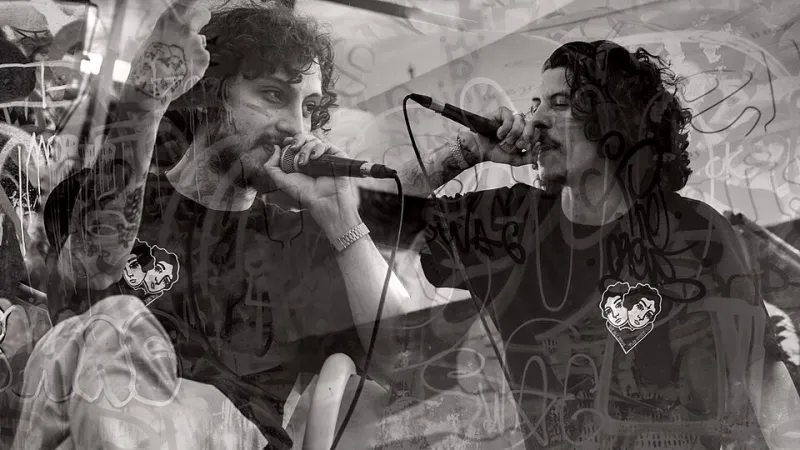
Photo: Andrepireschino, CC BY-SA 4.0, via Wikimedia Commons
For most of the 20th century, making it in music meant one thing: getting a label deal. The major labels controlled the distribution pipelines, the radio relationships, the press connections — basically everything that stood between a talented artist and an actual audience. You played by their rules or you stayed local. That was the deal.
That deal is dead. And nobody's doing more to bury it than independent collectives who figured out a different way to build.
LaPac Boys didn't need a boardroom full of A&R executives to validate their sound. They built a fanbase the direct way — through the music itself, through relentless consistency, and through a relationship with their audience that no corporate intermediary could replicate or manufacture. And in doing so, they've become part of a much bigger story about where the music industry is actually headed.
The Old Model and Why It Cracked
To understand why what LaPac Boys represents matters, you have to appreciate how broken the traditional system had become. Major label deals that looked like opportunities were often financial traps — recoupable advances that kept artists in debt to their labels for years, sometimes decades. Creative control clauses that gave suits in a midtown Manhattan office final say over what an artist could release and when. Marketing budgets that got pulled the moment an album underperformed in the first week.
The system worked great for the people at the top. For artists? Not so much. And audiences started to notice the disconnect between the music that was getting pushed and the music that was actually resonating with people's real lives.
Then streaming happened. Then social media happened. Suddenly the gatekeepers weren't holding as many gates.
What Makes the Collective Model Different
Collectives like LaPac Boys operate on a fundamentally different logic. Instead of one artist navigating a label relationship alone, you've got a group of people pooling creative resources, sharing skills, and building something that's bigger than any individual member's career. The collective structure creates resilience — if one member has a slower period, the others carry momentum. If one project doesn't land the way everyone hoped, the group's identity doesn't collapse with it.
But the structural advantage is only part of the story. What really sets the collective model apart is the culture it creates around the music. LaPac Boys fans aren't just consumers of content — they're participants in an ongoing story. They've watched this group evolve in real time, through the underground phase, through the breakthrough moments, through the setbacks and the wins. That kind of longitudinal investment creates a loyalty that no label marketing campaign can buy.
When a LaPac Boys record drops, the fans who've been there from the beginning feel personally connected to it. That's not an accident. It's the direct result of artists who chose to keep the distance between themselves and their audience as short as possible.
Authenticity as a Business Strategy
Here's the thing that traditional industry thinking gets wrong about independent artists: it treats authenticity as a soft, unquantifiable quality rather than a genuine competitive advantage. The assumption has always been that polish and professional infrastructure were what separated successful artists from struggling ones.
But audiences in 2024 — and especially hip-hop audiences — have finely tuned radar for what's real and what's manufactured. The LaPac Boys didn't build their following by sounding like what a label told them to sound like. They built it by sounding exactly like themselves, consistently, over time, without apology. That consistency reads as trustworthiness, and trustworthiness is what converts casual listeners into ride-or-die fans.
This is actually a lesson the broader industry has been slow to internalize. A&R departments still chase trends, trying to replicate the sound that worked six months ago. Meanwhile, artists who have a clear, authentic point of view are building durable careers that don't depend on any single moment of cultural timing.
Rewriting the Rules of Fan Engagement
Another place where the LaPac Boys model diverges sharply from traditional industry practice is in how they engage with fans. The old model was essentially broadcast: labels pushed content out through controlled channels and fans received it passively. The relationship was transactional and one-directional.
What independent collectives have pioneered is something closer to a genuine community. Social media is part of it, but it's more than just posting regularly. It's about creating a sense of shared identity — fans feel like they're part of the LaPac Boys story, not just spectators of it. That sense of belonging is extraordinarily powerful, and it translates into the kind of sustained engagement that streaming algorithms reward and that traditional marketing budgets struggle to manufacture.
The fan zone model, quite literally, is the future. Spaces where fans can gather, discuss, and celebrate the music — without the noise of corporate messaging — are where the most devoted communities form. LaPac Boys fans understand this intuitively.
What This Means for Hip-Hop Specifically
Hip-hop has always had a complicated relationship with independence. The genre was built by people who were locked out of mainstream structures and had to create their own lanes. But as hip-hop became the dominant commercial force in American music, a lot of that independent spirit got absorbed into the very label system it once rejected.
What collectives like LaPac Boys represent is a return to that original ethos — not out of nostalgia, but out of a clear-eyed understanding that independence, in the current landscape, is actually the smarter play. You keep your masters. You control your rollout. You build a business around your music rather than handing your music to someone else's business.
For younger artists watching this model succeed, the message is loud: you don't have to wait for permission. The infrastructure to build a real career exists outside the traditional system, and artists who figure that out early have a significant advantage over those who spend years chasing a deal that may never come — or that may not be worth having when it does.
The Bigger Picture
LaPac Boys aren't just a great group making great music. They're a proof of concept for a different way of doing things — one that prioritizes artistic integrity, direct fan relationships, and long-term sustainability over the short-term validation of a label cosign.
The music industry's rules aren't being broken so much as they're becoming irrelevant. And the collectives who figured that out first are already living in the future the rest of the industry is still trying to catch up to.
We're watching it happen in real time. Pay attention.