No Label, No Problem: The Gritty Rise of LaPac Boys From Parking Lot Cyphers to Festival Main Stages
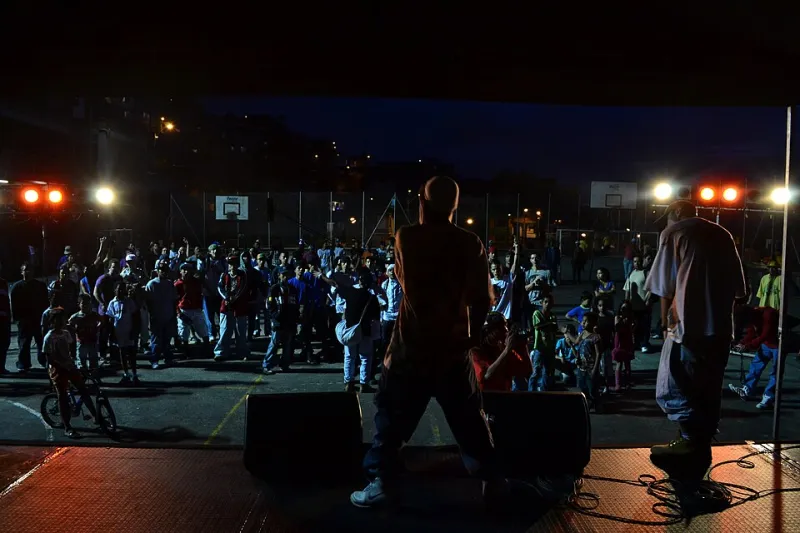
Photo: GranUja Memento, CC BY-SA 4.0, via Wikimedia Commons
There's a version of the LaPac Boys story that gets told a lot at this point — the viral clip, the festival announcement, the think pieces in music blogs calling them "the realest thing happening in hip-hop right now." But if you want to understand what actually built this movement, you have to rewind to way before any of that. You have to go back to the cyphers, the cramped DIY venues, and the stubborn refusal to let anyone else control the narrative.
Where It Started: Concrete Stages and Zero Budget
Ask anyone who was plugged into the underground circuit in the early days, and they'll tell you the same thing — the LaPac Boys had an energy that was impossible to fake. Long-time fan Marcus Delray, who's been following the crew since their earliest public performances, remembers catching them at a community block event that barely had a working PA system.
"It wasn't even a real stage," he told us. "They were performing off a flatbed truck, and the whole neighborhood just stopped what they were doing. That's when I knew these guys were something else entirely."
That grassroots foundation wasn't accidental. The collective made a deliberate choice early on to build their audience through direct connection rather than chasing industry gatekeepers. They dropped music on Bandcamp before streaming was king, handed out USB drives at shows, and treated every single performance — no matter how small the room — like it was Madison Square Garden.
The Independent Blueprint
What separates the LaPac Boys from dozens of other crews who came up around the same time is the discipline behind their independence. While plenty of talented artists got sidetracked chasing deals or waiting for a co-sign that never came, the collective kept releasing on their own terms. Limited-run vinyl drops. Self-produced visual projects. Merchandise designed in-house that actually reflected the aesthetic they'd been building since day one.
Venue owner Tanya Okafor, who books talent at a mid-sized club in the Midwest, remembers when the LaPac Boys first reached out to play her space. "They came in with a full production deck, a detailed rider, and a marketing plan for the show," she said. "Most artists at that stage of their career don't even know what a rider is. These guys were running it like a business from the very beginning."
That professionalism, paired with undeniable creative output, started turning heads in music industry circles — even as the collective remained publicly resistant to major label conversations. The message was consistent: the music belongs to us, and so does the relationship with the people who love it.
Social Media as a Tool, Not a Crutch
The LaPac Boys' relationship with social media is worth examining on its own, because it breaks from how most acts treat it. Rather than flooding timelines with promotional content, they used platforms strategically — dropping surprise freestyles during culturally significant moments, engaging directly in comments, and letting fans feel like genuine participants in the story rather than passive consumers.
A few key moments stand out. A late-night freestyle session that went unexpectedly viral introduced the collective to hundreds of thousands of new listeners overnight. But instead of immediately pivoting to capitalize on that spike with a major push, they stayed course — responding to fans personally, directing new listeners back to their deeper catalog, and keeping the conversation grounded.
Music journalist and cultural critic Devon Ashby, who covers independent hip-hop for several outlets, wrote about this approach in a widely shared piece a couple years back. "What the LaPac Boys understand that a lot of artists don't," she wrote, "is that virality without infrastructure just creates a crowd with nowhere to go. They always had somewhere to send people."
Collaborations That Meant Something
Another pillar of the LaPac Boys' ascent was the way they approached collaborations. Rather than chasing features from whoever was charting at any given moment, they built relationships with artists who genuinely aligned with their creative vision. Some of those surprise team-ups dropped with zero advance notice — a track here, a joint live set there — and every single one felt like a natural extension of what both parties were already doing.
Those moments also served to expand their audience organically. Fans of collaborating artists got pulled into the LaPac Boys universe because the music actually made sense together. It wasn't a calculated cross-promotional play. It felt like a genuine creative conversation, and listeners could tell the difference.
Festival Season and the Arrival Moment
By the time festival season came calling with real headlining slots, the LaPac Boys had already done the work that most acts try to fake their way through. They had a devoted fanbase that had been nurtured over years. They had a live show that had been refined through hundreds of performances at every level of venue imaginable. And they had a catalog deep enough that setlists didn't feel like a highlights reel — they felt like a journey.
Festival audiences who discovered them for the first time during those headline sets were often surprised by how tight the whole operation ran. Production design that punched way above what you'd expect from an independent act. Crowd interaction that felt spontaneous but clearly came from years of reading rooms and adapting in real time.
"They made our stage look like the most important place on the grounds that day," one festival production coordinator told us. "And they did it without a single major label dollar behind them."
What the Movement Actually Means
The LaPac Boys story resonates beyond music because it's a blueprint for creative autonomy in an industry that constantly tries to absorb and dilute independent voices. They didn't wait for permission. They didn't compromise their sound to fit a format. They built community first and let the commercial success follow from that foundation.
For fans who've been riding with them since the flatbed truck days, watching the collective step onto major festival stages feels less like an arrival and more like a confirmation. This was always where it was headed. The path just ran through every parking lot, back room, and Bandcamp page along the way.
And honestly? That's exactly what makes it worth celebrating.