More Than Merch and Streams: How LaPac Boys Turned Their Fanbase Into a Real Community
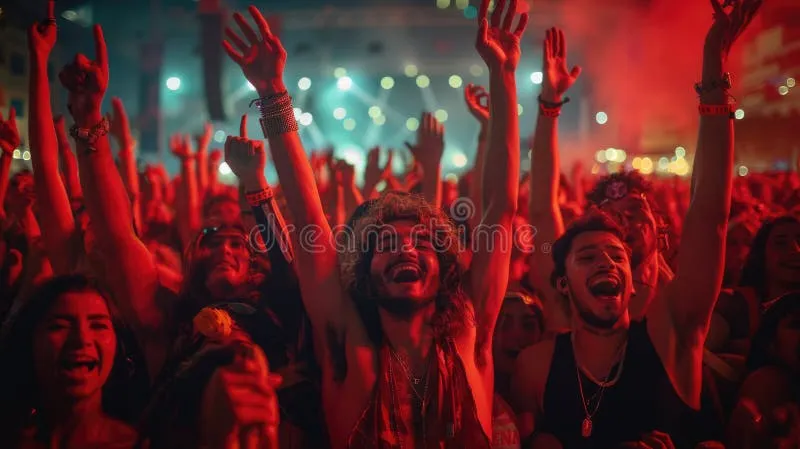
Photo: diverse music fans crowd concert community connection, via thumbs.dreamstime.com
There's a word that gets thrown around a lot in music circles these days: community. Labels slap it on press releases. Brands pay influencers to manufacture it. Algorithms try to simulate it with playlist clusters and "fans also like" suggestions. But spend five minutes in any LaPac Boys fan space — a Discord server, a comment section, a tailgate outside a venue — and you'll feel something that all that manufactured energy can't replicate. It's real, it's loud, and it didn't come from a marketing budget.
So how exactly did the LaPac Boys pull this off? And why are so many other artists scrambling to reverse-engineer what this collective has built organically over the years?
The Old Model Was Built on Distance
For decades, the music industry ran on mystique. Artists were supposed to be untouchable. You bought the album, you watched the interview on late-night TV, you maybe got a thirty-second meet-and-greet if you won a radio contest. The relationship was transactional by design — fans consumed, artists performed, and the label sat in the middle collecting the margin.
The LaPac Boys came up in a totally different environment. Born out of parking lot cyphers and local word-of-mouth, they never had the luxury of a gatekeeper to hide behind. Every early fan was a collaborator in the truest sense — sharing recordings, showing up to DIY shows, spreading the word because they genuinely believed in what they were hearing. That foundation didn't disappear when the audiences got bigger. It scaled with them.
Why Parasocial Doesn't Have to Be a Bad Word
Psychologists have spent years studying parasocial relationships — the one-sided emotional bonds people form with celebrities or public figures they've never met. The conventional take is that these connections are hollow substitutes for real human interaction. But the LaPac Boys situation complicates that narrative in interesting ways.
When fans feel like they actually know the people behind the music — their creative process, their struggles, the inside jokes that show up in lyrics — the emotional investment stops being purely parasocial and starts resembling something more mutual. The LaPac Boys have been remarkably consistent about pulling back the curtain: behind-the-scenes content that feels unfiltered, social media interactions that don't read like they were drafted by a PR team, and a general vibe of "we're figuring this out together" that resonates especially hard with younger fans who are tired of polished inauthenticity.
The result? Fans who don't just listen passively. They advocate, they create, they bring in new listeners. The community becomes self-sustaining in a way no algorithm can replicate.
The Grassroots Economy Nobody's Talking About
Here's something that doesn't get enough attention: the LaPac Boys fanbase has quietly built its own micro-economy. And we're not just talking about official merch drops, though those sell out fast enough to make the point on their own.
Fan-made content — edits, remixes, artwork, custom gear — circulates constantly in LaPac Boys spaces. Some of it is purely for love of the craft. Some of it has turned into genuine side hustles for fans with the skills to match their passion. Local fan meetups have spawned small businesses. Online communities have connected people who've gone on to collaborate professionally in fields that have nothing to do with music.
This is what community economists sometimes call value spillover — when the energy generated around a cultural product creates value that extends well beyond the original transaction. The LaPac Boys didn't plan this. But they created the conditions for it by treating their audience as participants rather than consumers.
What Other Artists Are Getting Wrong When They Try to Copy It
Plenty of artists and their management teams have noticed what the LaPac Boys have built and tried to replicate it. Most of them fall flat, and the reasons are pretty predictable.
First, you can't manufacture authenticity retroactively. If an artist spent years behind a wall of handlers and suddenly wants to seem "accessible," fans smell the pivot immediately. The LaPac Boys' community didn't get built during a rebrand — it was there from day one.
Second, engagement without genuine reciprocity is just content marketing with extra steps. Dropping a comment under a fan post is not the same as actually listening to your audience and letting that feedback shape your creative direction. The former is a tactic. The latter is a relationship.
Third — and this one's underrated — you have to give the community room to breathe and self-organize. Over-managed fan communities feel like corporate employee engagement programs. The best ones have loose structures, organic leadership, and the freedom to develop their own culture. LaPac Boys fan spaces have inside language, recurring jokes, shared rituals. That kind of thing can't be assigned from the top down.
What This Means for the Broader Music Landscape
The LaPac Boys effect is already visible in how newer acts are approaching their early career moves. More artists are skipping the "wait for a label to validate you" phase and going straight to building real relationships with small but deeply engaged audiences. The logic is sound: a thousand fans who would follow you anywhere are worth more — creatively, financially, emotionally — than a million passive streams.
It also puts pressure on the industry gatekeepers who've long controlled access to audiences. When artists can build genuine community without label infrastructure, the leverage equation shifts. The LaPac Boys didn't set out to disrupt the music business, but their model is quietly doing exactly that — one real human connection at a time.
For the fans who've been part of this ride since the early days? None of this is news. They already knew they were part of something different. The rest of the industry is just catching up.